


Are Your Clients Changing Faster Than You?
 4 minutes
B2B decision-makers are evolving fast, with younger, tech-savvy generations demanding more engaging, authentic, and mobile-friendly content. As digital channels saturate, differentiation now depends on emotional storytelling and relevance. This article explores how marketers can adapt to stay ahead of their changing clients.
Executive Summary
- Younger B2B decision-makers (especially Gen Z and Millennials) value concise, visually engaging, and relatable content over jargon-heavy messaging.
- Generational differences shape how audiences research and trust information—Millennials lean on peers and influencers, while Boomers rely on experts.
- To stay competitive, B2B brands must humanize communication, embrace emotional storytelling, and design content optimized for mobile engagement.
In the ever-evolving landscape of business-to-business (B2B) interactions, clients across various industries have been evolving the way they engage with brands and make purchasing decisions. With a new generation of decision makers who have grown up with a tablet in their hands rising through the ranks, this prompts the question: have companies adapted their marketing enough to keep up?
“More caution in B2B purchasing since choice is not with personal funds.”
The intricacy of B2B lies in the fact that decision-makers represent organizations rather than themselves. They make purchasing choices on behalf of their companies, not with their personal funds. Consequently, B2B decision makers tend to be more cautious than their direct consumer counterparts. Considering this, we often address B2B clients impersonally, occasionally creating a sterile interaction of one entity conversing with another.
“A few years ago, technology was the issue, but a lot has improved.”
Companies have made significant strides in engaging with their B2B clients, leveraging technology to maintain a consistent presence even when sales teams operate remotely. A few years ago, technology posed challenges, but substantial improvements have happened since then.
However, with the mainstream of companies having now adopted a similar digital toolkit, audiences are flooded with information, and differentiation is becoming more critical than ever. Impact now hinges on whether the content truly engages with, and meets the needs of their specific audiences.
Moreover, understanding how different groups of decision-makers access information is crucial, especially considering the rise of a younger demographic.
The B2B Content Conundrum: Text-Heavy and Jargon-Laden
When examining B2B content, a common challenge persists: it remains largely impersonal, un-emotional, text heavy and laden with industry jargon.
As we explore ways to enhance communication, we must address this issue head-on. The preference for emotional messages and storytelling over cold facts, even in a B2B environment, has been extensively examined, as demonstrated by research from the B2B Institute.
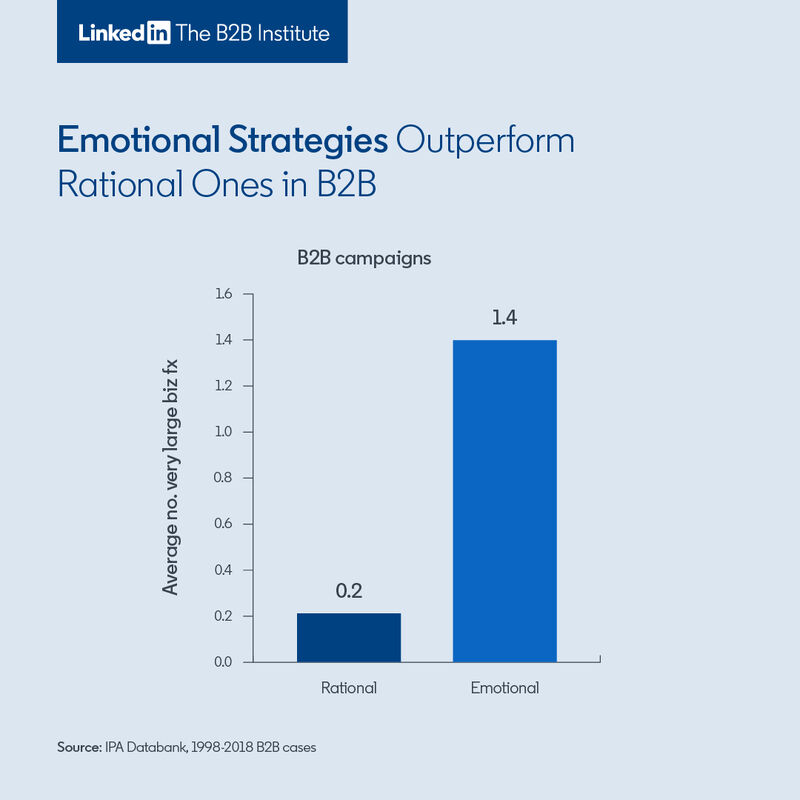
Although all age groups are constantly adapting to new technologies, there is still a difference in how they use and trust it. A nuanced approach considering individuality and circumstance is obviously needed. Research from GWI shows that there is a difference in age in how people search for information and what sort of engagement they prefer.
A study from GWI* shows the preferred way of brand research by generation:
| GenZ 1997-2007 | Millennials 1983-1996 | GenX 1964-1982 | Baby boomers 1948-1963 |
| 51% Social networks | 51% Search engines | 56% Search engines | 61% Search engines |
| 49% Search engines | 48% Social networks | 40% Consumer reviews | 43% Consumer reviews |
| Value most: collaborator | Value most: peer | Value most: practitioner | Value most: expert |
“Boomers are more likely than the average to say they do not trust influencer recommendations; they prefer expert opinions. This contrasts with Millennials who trust influencers and value peer recommendations.”
These preferences have significant implications for communication strategies, influencing who delivers the message and how it resonates with them.
“The oldest Gen Zers are now 27 and they are the best educated generation so far!”
The oldest Gen Zers, now 27, represent the best-educated generation to date. They determine content relevance in just 8 seconds, that is 4 seconds less than Millennials. This speed underscores the need for concise, impactful messaging. **
“GenZ only needs 8 seconds to decide if content is valuable to them.”
Mobile-Friendly Content: The New Norm
Regardless of age, mobile devices dominate content consumption. Crafting mobile-friendly content—short-form, visually engaging, and easy to navigate—is paramount.
Yet, B2B content can be jargon heavy, with lengthy text. To effectively engage younger decision makers and stay aligned with evolving user preferences, it is logical to customize B2B messages accordingly and keep in mind who they listen to and where they find information.
After all, why would someone who is enjoying dynamic, engaging formats on social channels not like it when doing business?
Who will boldly test the waters and tailor their approach to resonate with younger decision makers? As the tides shift, those who adapt swiftly will steer the course toward success.
For more please get in touch.
Sources:
About the author

See Also
AI SEARCH: BEYOND THE HYPE – DRIVING REAL BUSINESS OUTCOMES AND GROWTH
AI-powered search is reshaping how customers discover and interact with brands. Learn how to leverage AI visibility and digital intelligence to drive meaningful growth and deliver the outcomes that matter most.
Benchmarking vs. Corporate Punk
This blog post examines how benchmarking can help improve performance but also limit innovation. It warns against settling for industry norms and encourages businesses to focus on creativity, customer needs, and forward-thinking growth.
Are B2B Marketers Ditching Brand for Fast Cash?
B2B marketers face a growing tension between short-term results and long-term brand growth. Despite understanding the value of brand building, many are held back by budgets, leadership focus, and pressure for quick wins. The blog post explores these challenges and calls for renewed investment in sustainable marketing strategies.
